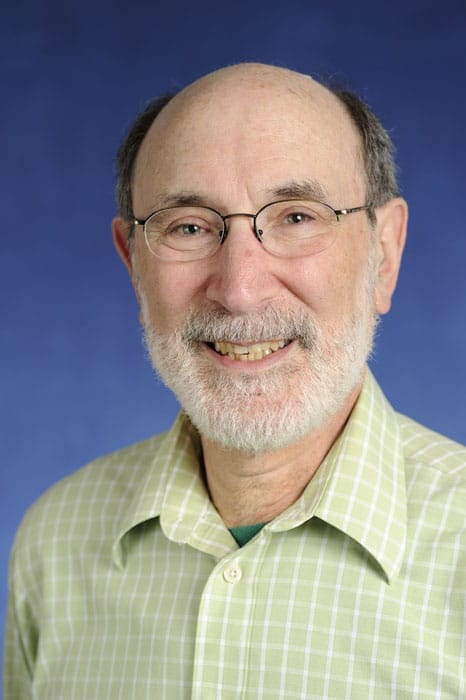
Karl L. Alexander

John Dewey Professor of Sociology and Department Chair

Office: Mergenthaler 533
Office Hours: By Appointment Only
Phone: 410.516.6178
Email: karl@jhu.edu
Curriculum Vitae (PDF)

  • My research tries to understand why some children, and some kinds of children, are more successful in school than others and how this affects them later in life. I am particularly interested in the role schools play in society's system of stratification, and how youngsters perform in school is an important part of the picture. Patterns of social inequality from generation to generation in large measure are maintained through the educational system. Children from disadvantaged family circumstances don't perform as well academically as do those from more advantaged families, and later, when they embark on careers or seek employment, their academic qualifications and credentials carry less value. This helps perpetuate historic patterns of advantage and disadvantage. "Success" in school can mean many things, but my work deals mainly with persistence in the school system (i.e., staying in school), academic performance, self-attitudes in the student role, and children's goals for the future (e.g., educational and occupational aspirations). Through survey studies of school age-youngsters, I try to identify features of the home, of the school, and of the individual that seem to promote or impede positive school adjustment.

    My work generally adopts a social-psychological, life-course perspective. In broad terms, it explores how aspects of personal development that are relevant to school success respond to influences at home and at school, and to the intersection of experiences across these two institutional contexts. The main data base I've been working with in recent years is the Beginning School Study, which since 1982 has been monitoring the personal and academic development of a large, representative sample of youngsters who began first grade that year in 20 Baltimore City Public Schools. An ongoing study, the BSS now is in its 18th year and in 1999 we successfully re-interviewed 80% of the original group as young adults (age 23 - 24). I'm presently working on the question of high school dropout. Forty-two percent of the BSS cohort left school without degrees. My research tries to identify early precursors of dropout back as far as first grade and tries to understand the impact of this decision for their later life prospects.

  • 230.109 Freshman Seminar: Hot Topics In Education

    230.655 Seminar on Sociology of Education

    230.312 Education and Society

    230.333 Quality and Inequality in American Education

  • 2005, D. R. Entwisle, K. L. Alexander and L. S. Olson. "First Grade and Educational Attainment by Age 22: A New Story." American Journal of Sociology 110(5): 1458-1502.

    2005, D. R. Entwisle, K. L. Alexander and L. S. Olson. "Urban Teenagers: Work and Dropout." Youth and Society 37(1): 3-32.

    2003, K. L. Alexander, D. R. Entwisle and S. L. Dauber. On the Success of Failure: A Reassessment of the Effects of Retention in the Primary Grades. Second Edition. Cambridge University Press.